Industrial Embroidery Machines – Applications, Types & Advantages
Industrial embroidery machines are essential in large-scale textile production, corporate branding, and uniform manufacturing. Unlike home or boutique-level machines, industrial models are designed for speed, durability, and continuous operation. They enable factories and commercial embroidery units to produce bulk quantities of embroidered apparel with consistent stitch quality and reduced downtime. This guide explores the applications, machine types, and advantages of industrial embroidery systems. Best Embroidery Machine for Home, Startups & T-Shirts
1. What Are Industrial Embroidery Machines?
Industrial embroidery machines are high-capacity embroidery systems built for commercial environments. They are typically multi-head and multi-needle machines capable of stitching multiple garments simultaneously. Advanced computer controls allow them to execute detailed logos, emblems, monograms, and decorative patterns at high speed.
These machines support large embroidery areas, thicker fabrics, and extended operating hours, making them suitable for apparel manufacturing and mass production.
2. Applications of Industrial Embroidery Machines
Industrial embroidery systems are used in a wide range of industries, including:
✔ Apparel Manufacturing
Factories use embroidery heads to embellish t-shirts, jackets, hoodies, sarees, children’s wear, and designer clothing.
✔ Corporate Branding
Logos are added to uniforms, shirts, jackets, and bags for companies, institutions, and organizations.
✔ Sports & Team Merchandise
Team names, patches, and crests are stitched onto uniforms and accessories for schools, leagues, and professional clubs.
✔ Uniform Production
Industrial embroidery is widely used for:
schools
hospitals
hospitality
security agencies
construction & industrial units
✔ Promotional & Retail Products
Bags, caps, towels, babywear, and home décor items are embroidered for retail and gifting markets.
✔ Military & Government
Badges, insignias, and name tags require precise and durable stitching, making industrial machines ideal.
3. Types of Industrial Embroidery Machines
Industrial machines vary by configuration and production capacity. Common types include:
1. Single-Head Industrial Machines
Designed for smaller production units or sample rooms. Suitable for boutique manufacturers and small-volume job work.
2. Multi-Head Industrial Machines
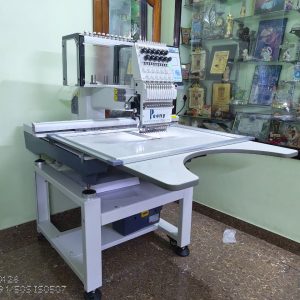
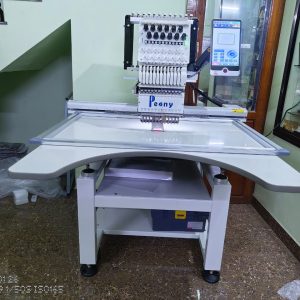
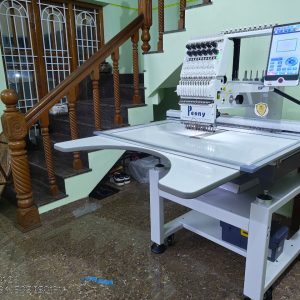
Feature multiple embroidery heads working simultaneously. Head counts can vary from 4 to 30+ heads depending on production needs.
3. Multi-Needle Systems
Each head may include multiple needles holding different thread colors, reducing manual intervention and boosting output speed.
4. Cap & Flat Embroidery Machines
Designed for logos on caps, hats, t-shirts, hoodies, and promotional merchandise.
5. Chenille & Chain Stitch Machines
Used for textured embroidery, varsity patches, and decorative designs often found in high-fashion apparel.
6. Laser Cutting + Embroidery Combo
These hybrid models integrate laser cutting with embroidery for appliqué and detailed fashion production.
4. Key Features of Industrial Embroidery Systems
Industrial models typically include:
✔ High stitch speeds for bulk productivity
✔ Multi-thread & multi-color support
✔ Large embroidery fields
✔ Memory and USB connectivity for design import
✔ Computerized pattern sequencing
✔ Automatic thread cutting & tension control
✔ Operators’ panel with touchscreen editing
✔ Servo motors for stability and precision
✔ Robust chassis for continuous operation
These features ensure reliability and consistent performance under heavy workloads.
5. Advantages of Industrial Embroidery Machines
Industrial machines offer several benefits compared to boutique or home embroidery systems:
a) High Production Output
Multiple heads allow simultaneous stitching, significantly increasing daily capacity.
b) Reduced Labor Costs
Automation eliminates manual thread changes and speeds up complex design execution.
c) Professional Stitch Quality
Logos, lettering, and emblems appear cleaner and remain consistent across large batches.
d) Suitable for Bulk & Repetitive Orders
Ideal for uniforms, retail production, and large garment contracts.
e) Long Operating Lifespan
Built for durability, heavy-duty components extend service life even under continuous operation.
f) Scalability for Growing Businesses
Factories can add more heads or machines as demand increases.
6. Who Should Invest in Industrial Embroidery Units?
Industrial machines are best suited for:
✔ Apparel factories
✔ Corporate branding firms
✔ Uniform manufacturers
✔ Export garment units
✔ Promotional merchandise suppliers
✔ Sportswear manufacturers
These businesses depend on speed, consistency, and automation to meet client and market demands.
Conclusion
Industrial embroidery machines are a vital asset for commercial textile and branding businesses. Their ability to produce large volumes of embroidered garments with precision and consistency makes them indispensable to modern apparel manufacturing. Whether used for uniforms, sportswear, promotional merchandise, or retail fashion, industrial embroidery systems deliver scalability, durability, and production efficiency that smaller machines cannot match.
0 Comments